
















 CRO
CRO Website speed and conversion: which pages should you improve?
Understand LCP, INP and CLS, distinguish real visitors from lab scores and check commercial outcomes after performance fixes.

SB
Sébastien Balieu
Jan 5, 2026


 The problem
 The customer sits at your house, but it was delivered by someone else.

Same frame, same rating out of five, same button. The customer sorts by price or availability and chooses you for the wrong reasons. The next day, he doesn't remember your name.
The room, the service, the morning product: none of that fits into a PDF menu and three compressed photos. What makes your regulars come back remains invisible to those who don't yet know you.
He searches on his phone, your site takes four seconds to open, the map is unreadable, he moves on to the next one. These tables leave no trace in your reservation book.

A portion of your reservations come from customers who already knew you and who simply went through the application. You pay back a percentage for a customer that you had won yourself, in the room.
 The solution
 He inspires you and takes the reservation while you are in the kitchen.
And your customers leave with your name in mind.

Your home, your chef, your neighborhood, what you serve and why. We book with you because we want you. The price ceases to be the only argument.

Large format photos, dishes, prices and allergens can be edited in seconds from your phone. What comes out of your kitchen at eleven o'clock is readable on Google at noon. Your room can be visited from a screen, exactly as it is.

Slots, covered by service, confirmations and automatic reminders: the customer books with you, without an intermediary. You keep the entire margin and above all his address, his preferences, his birthday. You can bring it back without paying again to find it.

Pages by neighborhood, by type of cuisine and by occasion, in French, Dutch and English, written for what visitors type into Google and ask the AIs. They continue to fill your room the day you leave the platform.
My job as a developer is to solve them.
Urban escape games
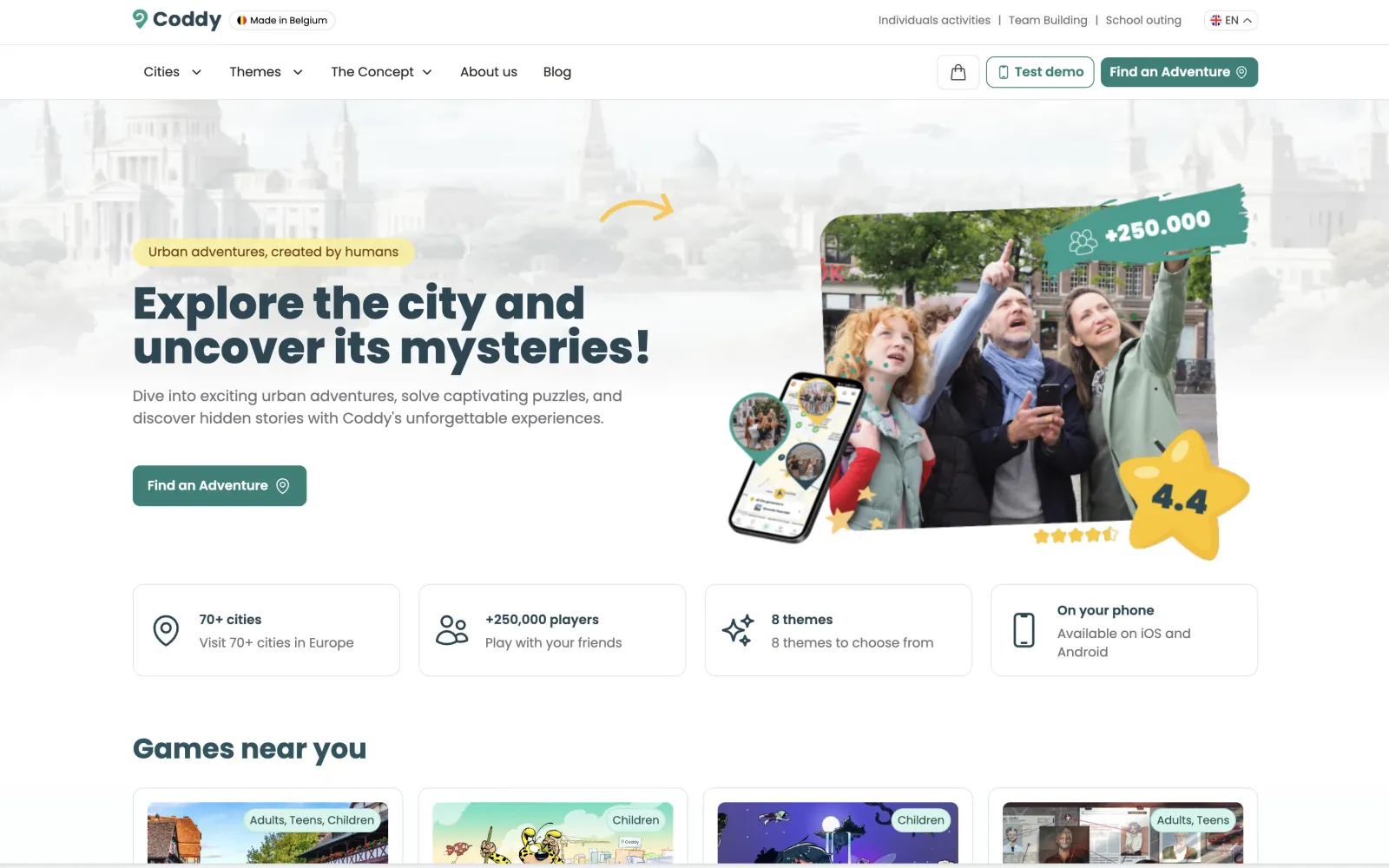
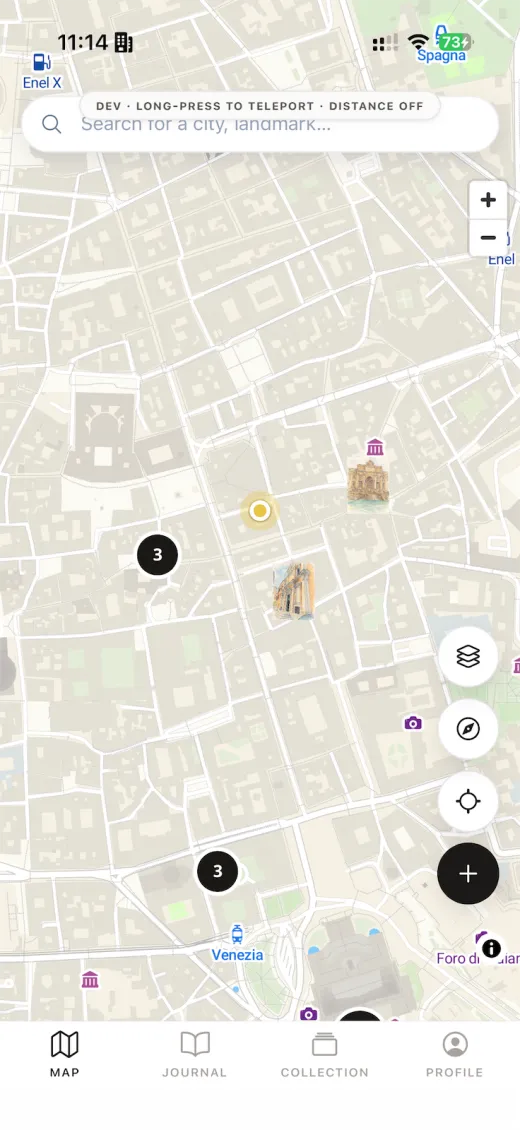
Transform every building you pass into a collectible card
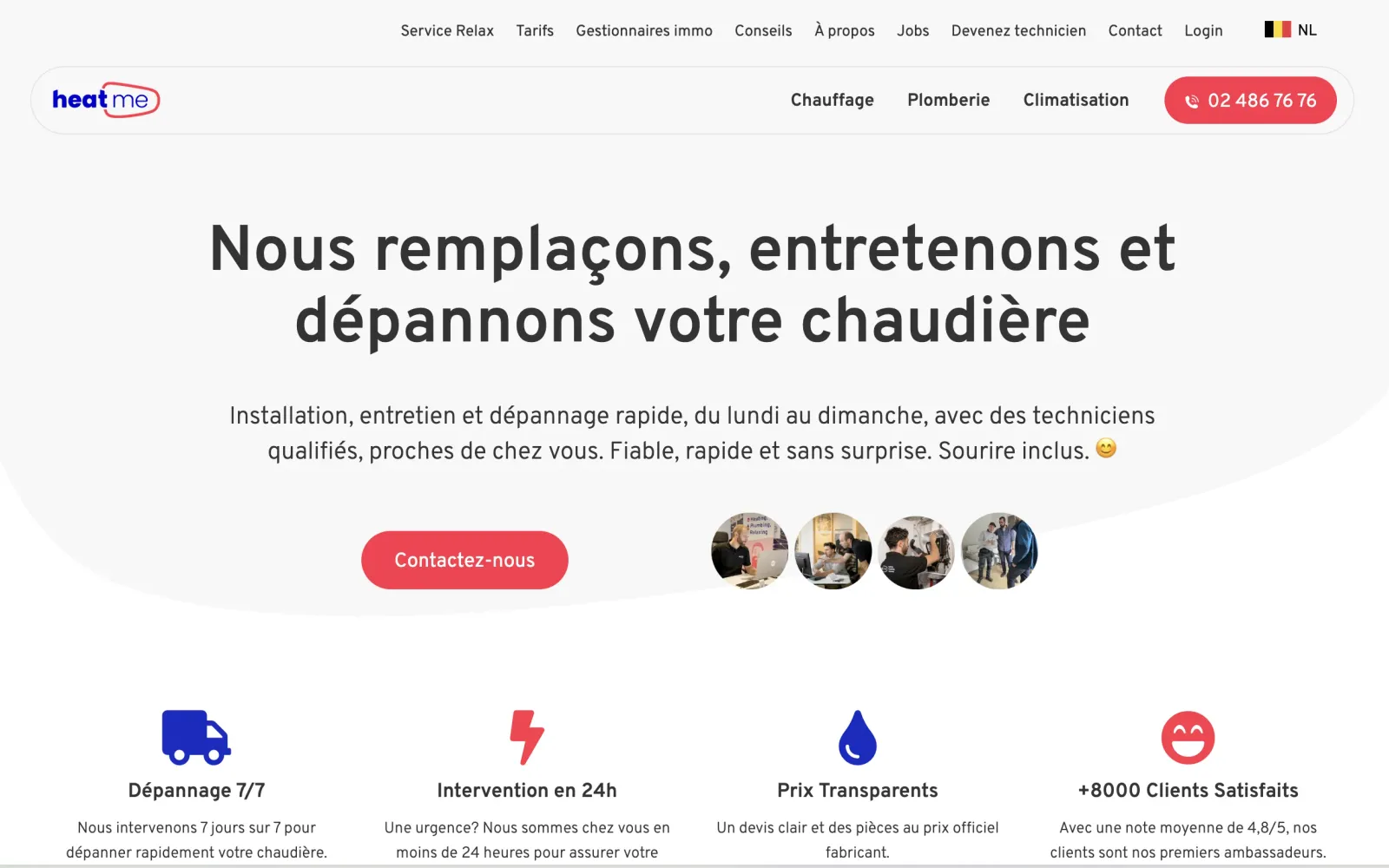
Largest network of heating engineers in Belgium
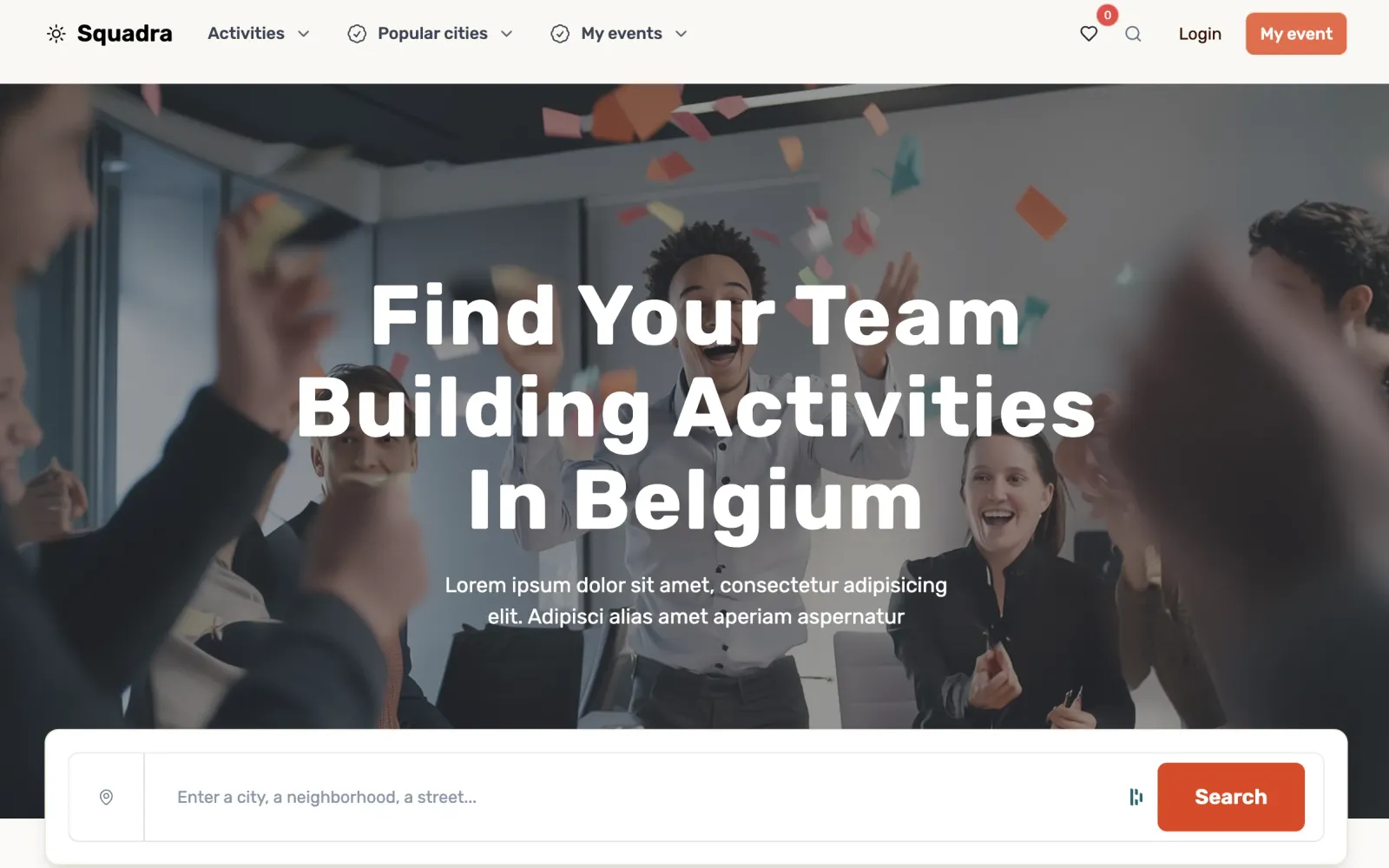
Team building activities marketplace
Internationally recognized board game publisher
What if the next project here was yours?
Ultra-fast sites and apps, built to measure.
Request a quoteSME managers who had the same need as you: a site that matches what they sell.
Sébastien is always attentive and understood our needs perfectly when it came to redesigning our website! The new site looks great and was delivered on time. We've already gained a few customers thanks to the improved SEO of the new site
Didier Boulvin
Coddy
Numinam's contribution to the development of our App has been significant in its success with our B2C and B2B customers.
Stephane Draux
Founder • Spengo
Numinam (One More Pixel) is doing a fantastic job for Euronet. They’ve started the mission in saving our web-site from a cyber-attack. We had lost a lot of information and they had to rebuild our web-site. They had to recover the data left on our…
Valérie Van Belle.
Managing director • Euronet
At Nallian we build solutions that are trusted by the world's leading airports, ground handlers and logistics companies. But our website no longer reflected that level of excellence. This redesign ensures our first impression matches the quality of…
Jean Verheyen
CEO • Nallian
The new website much better reflects who we are. It tells our story more clearly, it's easy to navigate, it looks fresh and modern. It is more Nallian.

Joke Aerts
Director of Marketing • Nallian
Numinam's technical and design vision has enabled us to improve our lead generation flows. A big step forward.
Jérôme Van De Sande
Product & Data Leader • Heat Me
Numinam has completely modernized our website. The design is clearer, more credible, and our visitors understand what we do. A real leap in quality. Also worth noting is the excellent collaboration between Numinam and our development agency. Thank…
Olivier Lafosse
Founder & CEO • Heat Me
It was a real pleasure to do business with Sebastien. He did a great job and transform our inefficient and boring website to a nice one that generate leads. Moreover, Sebastien is a patient and reliable partner and he's always ready to help.

Shirley Boterdael
Marketing & Com. Manager • Highcodata
You are not talking to a salesperson who will pass on to a project manager, who will brief a developer and a designer: you have all these people in front of you, in one, from the first meeting.
We lay the foundations: what your visitors see and feel.
from €595
Before writing a single line of code, we clarify the journey of your visitors and the image you send. The design then serves to inspire and drive towards booking.
Your site, developed under Astro.
from €1,190
I develop your custom site: it loads in less than a second on a phone, in the street, and transforms your visitors into reservations. The code is 100% yours, and there are no plugins to maintain.
Being found on Google and cited by AIs.
from €595
Your future customers search Google Maps and ask ChatGPT where to eat tonight. I structure your site so that it stands out in both places, and I send you the position report so that you can see it move.
Save time on repetitive tasks.
from €595
Confirmations, reminders from the day before, birthday reminders, group requests: I automate what keeps your team busy between two departments, with or without AI. Measurable results in 4 to 6 weeks.
Your site lives, improves and remains efficient.
I don't deliver a project and then disappear. Updates, optimizations, A/B testing and dashboards: I remain your long-term partner.
01 Framing call and implementation of the project
02 Models and validation
03 Development
04 SEO / AEO / GEO optimization
05 Launch and training
06 Monitoring and optimization

25 minutes to look at your situation together: your visibility on Google Maps, what you pay each month to the platforms, what your site says about your house today. You leave with a clear diagnosis, even if we never work together.
It's free and without obligation, and you can speak to me directly on the phone. The developer you speak to is the one who will build your site.
Three packages, still at the rate of €595 per day. Landing page (4 days, from €2,380): a page for a specific offer or event. business website (8 days, from €4,760): your online establishment with an interactive menu, local SEO and an optimized Google Business Profile. Site with CMS (from 16 days, from €9,520): for a group or several establishments, advanced SEO architecture, multilingual and integrations. In all cases: zero commission on your reservations. A 25-minute call is enough to meet your needs.
Your customers book directly on your site: choice of time slot (lunch/evening), number of place settings, date, possibly a specific table. Availability is displayed in real time. Once the reservation is confirmed, the customer receives an automatic email and/or SMS. A reminder is sent the day before. In the event of cancellation, the slot is automatically freed. The system synchronizes with your calendar (Google Calendar or internal tool). You don't have to manage anything manually. For hotels, the same principle applies to rooms with availability management and connection to your PMS.
Yes, and this is the strategy I recommend when starting out. The goal is not to shut down TheFork overnight, but to build a growing direct booking channel. Your site becomes your main showcase, through local SEO, Google Maps and your networks; platforms remain a complementary channel. Over the months, the share of direct reservations increases and your commissions decrease accordingly. You decide the pace, based on what you measure.
Yes. You modify dishes, prices, allergens and photos in a few clicks from a simple interface, without requiring a developer. The change is immediately online, readable on mobile and indexable by Google, where a PDF menu is not. During the mock-up phase, I show you the interface before building it, so that you validate what you are going to use every day.
Local SEO is integrated from the design: Schema.org markup for establishments (Restaurant, Hotel, LocalBusiness), NAP consistency (name, address, telephone) on all pages, Google Maps integration, and content optimization for geolocated searches. I also guide you on managing your Google Business Profile. The goal: to appear in the top 3 when a tourist searches for your type of establishment in your neighborhood, on Google and in the AI responses of ChatGPT and Perplexity.
Yes. The site is multilingual FR/NL/EN (or any other language depending on your clientele). Each version is SEO optimized in its language and indexed separately by Google. If you manage content independently, the admin interface allows you to publish in each language independently.
It depends on the platform. TheFork offers an embeddable widget that can coexist with your direct booking system. For hotels, the connection with Booking goes through a channel manager. The objective is to avoid duplicates: each slot reserved, regardless of the channel, updates your availability. The exact configuration is defined during the scoping call based on your current tools.
The complete source code lives in your own Git repository from day one, on standard open source technologies, with technical documentation provided on delivery. Trusted developers know the project and can intervene.
What I can't promise is to be available forever; what I can guarantee is that my departure will not block you.
Yes, the photos remain your responsibility. This is what makes you want to book, so this is the item worth putting money on. If you don't have professional photos, I can recommend food and hospitality photographers in Brussels. On the technical side, all images are compressed and served in modern formats: they are displayed quickly without losing visible quality.
CRO Understand LCP, INP and CLS, distinguish real visitors from lab scores and check commercial outcomes after performance fixes.
Sébastien Balieu
Jan 5, 2026
 Price
Price Compare Numinam website budgets, scope, migration, ongoing costs and funding before requesting a quote in Belgium.
Sébastien Balieu
Dec 11, 2025
Calendar not showing? Open it in a new tab