Turning every building you walk past into a card worth collecting
Stamp
Mobile App Development, Product Design, AI Integration, Geospatial Development
CLIENT
Stamp
Year
2026
Updated
June 2026
Role
Product design and full-stack development of a cross-platform mobile app
Tech stack
Goals
- Fill the gap left by Foursquare City Guide and Swarm's reduced gamification
- Generate a unique woodcut-style illustrated stamp for each building from a user photo
- Reward first-in-the-world discoveries with a permanent, named collectible card
- Launch first in heritage-dense cities such as Lisbon, Porto, Brussels, Vienna and Amsterdam
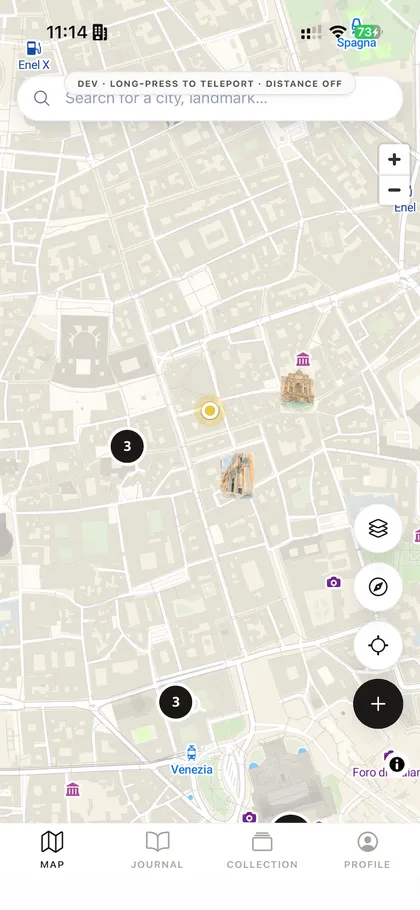
Stamp is a project I'm building right now: a cross-platform mobile app that gamifies urban exploration, where each monument becomes a unique AI-illustrated stamp, and where being the first person in the world to register a place leaves your name engraved on it for good.
Filling the check-in gap left by Foursquare and Swarm
When Foursquare shut down its City Guide at the end of 2024 and Swarm quietly dropped most of its gamification, it left a real gap. Millions of people who loved logging the places they visited suddenly had nowhere to go, and no reason to keep doing it.
The opportunity was clear, but so was the trap. The world doesn't need another generic check in app. It needs something built for a single purpose: discovering and collecting architecture and heritage, with a reason to come back tomorrow.
The people left behind by those shutdowns weren't casual users. They were the explorers and heritage lovers who genuinely enjoyed logging every place they visited, and who lost both the record of where they'd been and the motivation to keep going. Replacing a generic feed wouldn't be enough; the missing piece was a sense of progress and ownership that made each new place feel worth visiting.
An AI stamp-collecting loop for urban exploration
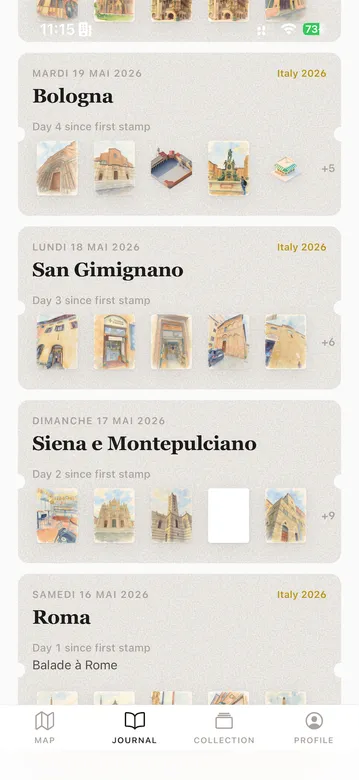
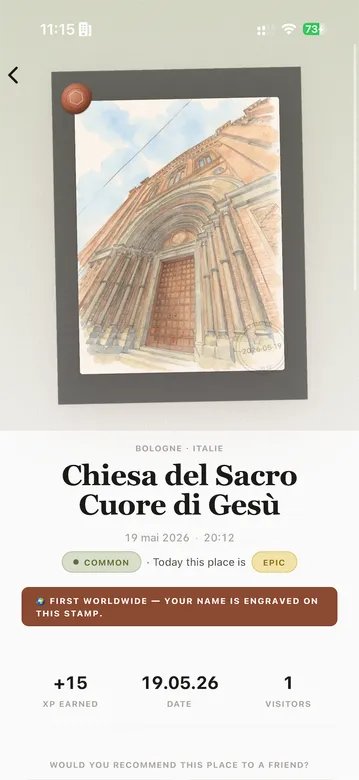
Stamp is designed around one satisfying loop. You walk past a building, get a notification, take a photo. If you're the first visitor in the world, an AI generates a one of a kind woodcut style illustration from your photo, and that stamp becomes the official, permanent card for that place, with your name on it.
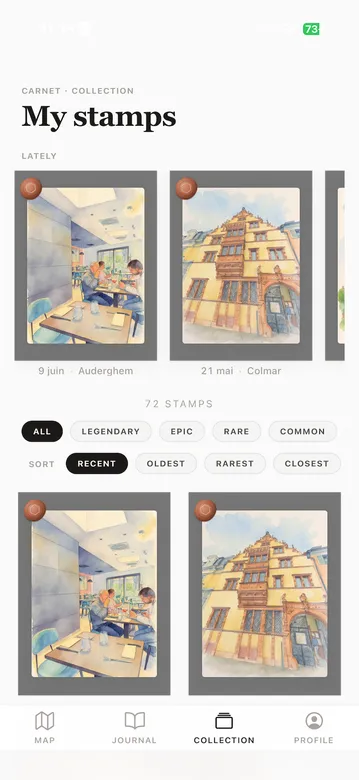
- A rarity system, from common to legendary, that rewards explorers who reach the places nobody else has;
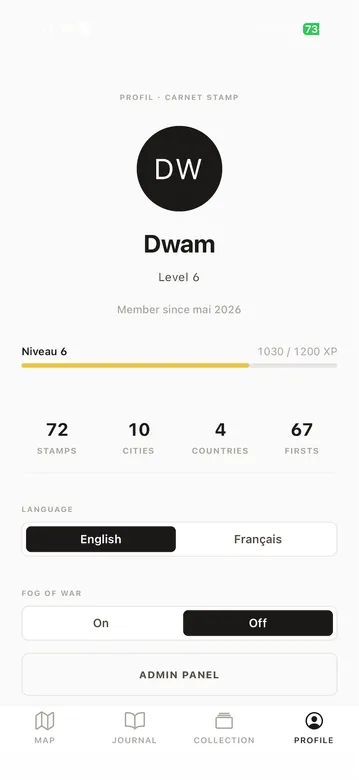
- An explorer profile that turns your travels into levels, titles and statistics;
- A shared map built the way Waze was built: everyone collects for themselves while enriching the same world for everyone else.
What makes the loop satisfying is that the reward is tied to the place itself. Because the first visitor's photo becomes the official, permanent card for a building, with their name on it, being early genuinely matters. The woodcut style illustration is designed to feel consistent across the whole map, so a collection reads like a coherent set rather than a folder of snapshots.
The rarity system and the explorer profile reinforce each other: common places keep the habit alive day to day, while rarer discoveries give committed explorers something longer term to chase.
Launching the Stamp app in heritage cities
Stamp is in active development, with first launches planned in heritage dense cities like Lisbon, Porto, Brussels, Vienna and Amsterdam. The foundation is already in place: a cross platform app, a geospatial backend, and an AI pipeline that produces a consistent, instantly recognizable stamp for any building on earth.
Starting in heritage dense cities is a deliberate plan rather than a finished rollout. Places like Lisbon, Porto, Brussels, Vienna and Amsterdam pack a lot of distinctive architecture into walkable areas, which should give early explorers plenty to discover and collect from the first sessions. The aim is to seed the shared map where there is the most to find, then let it grow outward as more people contribute.
The goal is simple. Make exploring your own city, or a new one, feel like collecting something rare.
Frequently asked questions
What is Stamp?
Stamp is a cross-platform mobile app, currently in development at Numinam, that gamifies urban exploration. It turns the buildings you pass into collectible, AI-illustrated cards, so discovering architecture and heritage becomes something you can log, collect and come back to.
How are the collectible stamps generated?
When you walk past a building and take a photo, an AI pipeline generates a woodcut style illustration from that photo. If you're the first visitor in the world to register the place, your stamp becomes the official, permanent card for that building, with your name on it. The pipeline is designed to produce a consistent, instantly recognizable style across every building.
What makes being first worth it?
Stamp rewards first in the world discoveries. The first visitor's illustration becomes the permanent card for a place, and a rarity system from common to legendary recognizes explorers who reach places nobody else has. An explorer profile then turns your travels into levels, titles and statistics.
When and where will Stamp launch?
Stamp is in active development and has not launched yet. First launches are planned in heritage dense cities such as Lisbon, Porto, Brussels, Vienna and Amsterdam, with the shared map intended to expand outward from there over time.
Planning a mobile or web app?
Let's talk about how Numinam can design and build your product, end to end.