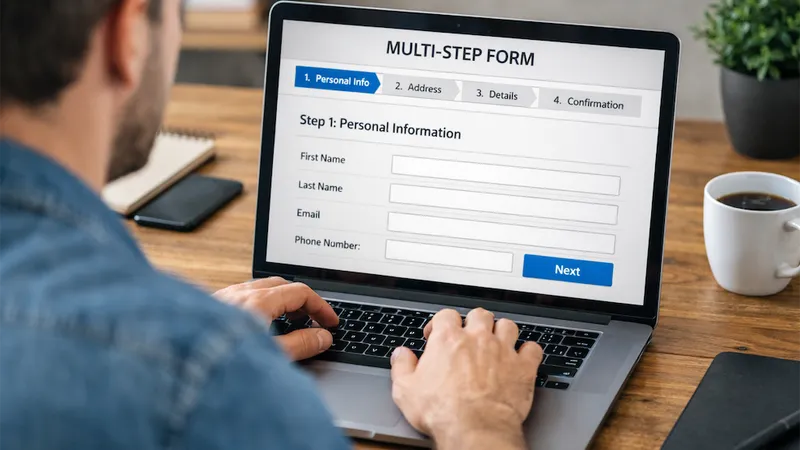














 Optimisation
 Conversion Optimization (CRO): How to increase your leads and sales in 2026

SB
Sebastien Balieu
Dec 11, 2025

The journey is built before the visual layer. We settle the navigation, the hierarchy of actions and the content of each screen, and the visual layer comes after.

Every state of the interface is drawn: empty, loading, error, success. Spacing and components come from a documented system, which removes half the usual back-and-forth during integration.

A product sold for several thousand euros a year cannot have a patched-together interface. Design does part of the credibility work before your first sales call.
The new website much better reflects who we are. It tells our story more clearly, it's easy to navigate, it looks fresh and modern. It is more Nallian.

Joke Aerts
Director of Marketing • Nallian
Numinam has completely modernized our website. The design is clearer, more credible, and our visitors understand what we do. A real leap in quality. Also worth noting is the excellent collaboration between Numinam and our development agency. Thank…

Olivier Lafosse
Founder & CEO • Heat Me
It was a real pleasure to do business with Sebastien. He did a great job and transform our inefficient and boring website to a nice one that generate leads. Moreover, Sebastien is a patient and reliable partner and he's always ready to help.

Shirley Boterdael
Marketing & Com. Manager • Highcodata

Analysis of your current interface, friction points identified and ranked by business impact. You know where your users drop off before we decide anything.

Site tree, sequence of screens, hierarchy of actions. That is the part that decides the conversion rate, long before the choice of colours.

Desktop and mobile, every state, ready for integration. If you want me to build it afterwards, that is described on the website creation page.

Colours, typography, components, usage rules, documented in Figma. Your team can add a screen in six months without breaking the consistency of the whole.

To test the journey before development, and to convince people internally. Getting a decision-maker to click through a prototype beats a twenty-page document.

You leave with the complete Figma, no dependency. The file is organised so another designer can pick it up.
Every project arrives with its own usage and deadline constraints. My job is to absorb them in the design rather than pass them on to the user.
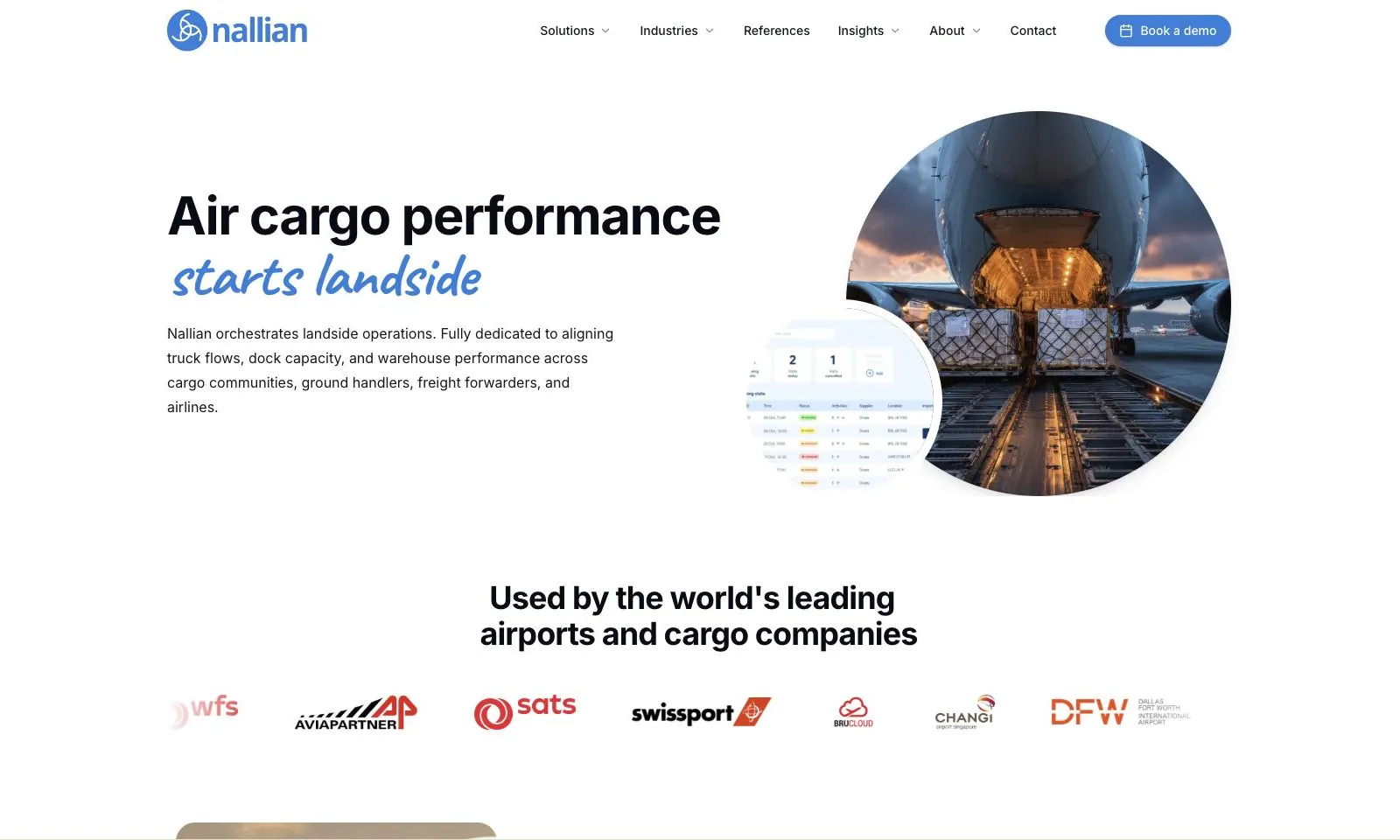
A B2B SaaS website redesign that loads in under a second
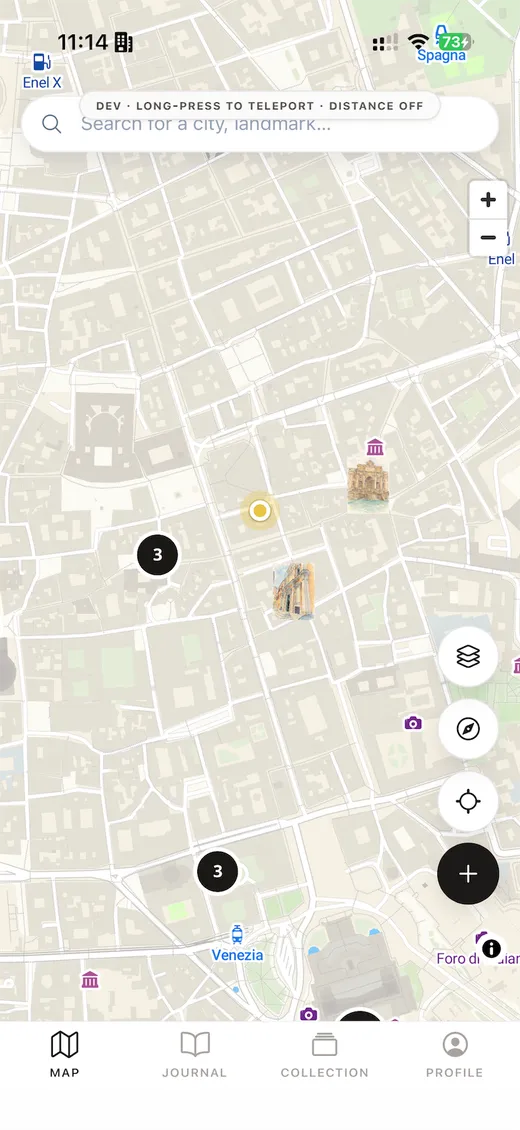
Turning every building you walk past into a card worth collecting
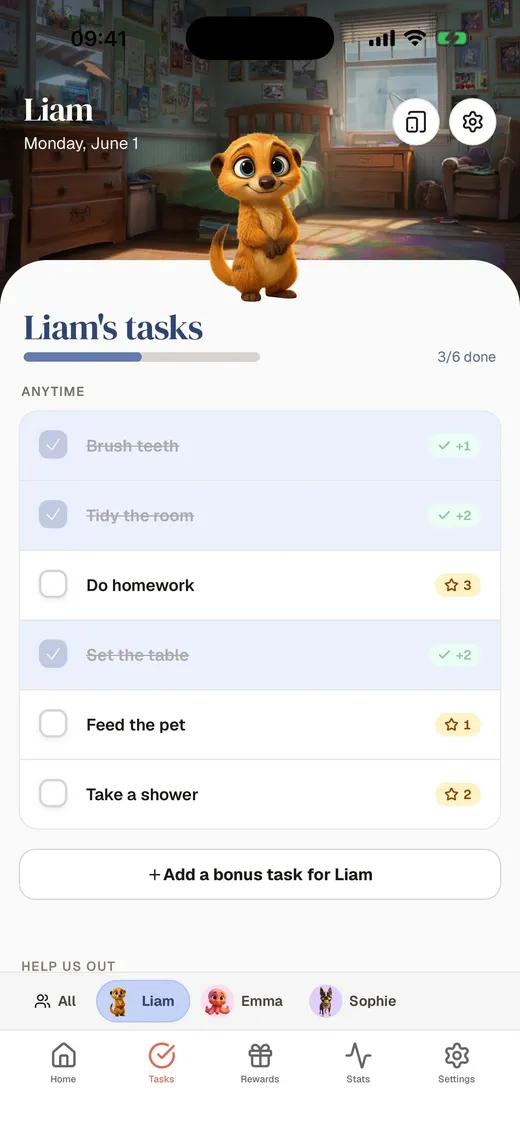
Helping families build positive habits at home
Urban escape games
What if the next project here was yours?
Ultra-fast sites and apps, built to measure.
Request a quote01 Scoping
02 Audit and journeys
03 Visual direction
04 Design system
05 Roll-out and delivery
I charge €595 per working day. The price depends on the number of screens, the number of states to cover and whether or not a brand style guide already exists.
UX decides what happens, UI decides what it looks like. Both are necessary, and doing them out of order is expensive: a beautiful screen sitting on a bad journey is still a bad journey.
| UX design | UI design | |
|---|---|---|
| Goal | That the user reaches their objective | That the interface is readable and credible |
| Deliverables | Journeys, site tree, wireframes | Mockups, components, design system |
| Central question | In what order, and why? | What does it look like, in which state? |
On a Numinam project, both are done by the same person. You avoid the moment when the interface designer discovers that the journey does not hold.
I charge €595 per working day, and the number of days depends on the number of screens and the number of states to cover.
| Service | Budget | What it includes |
|---|---|---|
| Key screen redesign | from €2,380 (4 days) | One journey handled end to end, base system |
| Complete interface design | from €7,140 (12 days) | Every screen, every state, documented system |
| Product retainer | €595 per day | Continuous design at the pace of your releases |
A project with no existing brand style guide takes one to two extra days, long enough to set the visual direction.
Yes, and that is the most frequent case. The mockups I deliver are made to be integrated by me or by your teams, with no difference in the level of detail.
When I do both, you save the handover phase and the back-and-forth that comes with it. The development detail is on the website creation page, and for a business application on the internal tools page.
The complete Figma file, which you own: mockups of every screen, components, styles, and the clickable prototype. Nothing is locked or hosted with me.
The file is organised to be picked up: named pages, grouped components, written spacing rules. That is the difference between a file another designer can continue and a file they would rather redo.
Not all signals carry the same weight. Some justify reworking the journey, others get fixed in a few days.
| Signal | Redesign justified? |
|---|---|
| Your users always abandon on the same screen | Yes, the journey is the problem |
| The design feels dated to you | Not enough on its own |
| Your support answers the same question ten times a week | Yes, the interface is not answering in their place |
| Every new screen looks like a different product | Yes, a design system is missing |
| You want to add a feature and nothing fits | Yes, the structure is saturated |
During the twenty-five minute audit, I look at your product and tell you which row you are in.
Yes, and it is the main use case for design-only work. I deliver annotated mockups, a documented system and a handover session over video to answer integration questions.
What your developers usually appreciate: the rare states are drawn. An empty screen, a network error, a list with two hundred entries, those are the cases that cost days when nobody planned for them.
No. If you have one, I work inside it and extend it to the interface components that are missing, which is almost always the case: a brand guide does not cover form fields or error messages.
If you do not have one, the visual direction gets set during the project, on one key screen treated completely. Count one to two extra days. I do not do full brand identity creation, logo included.
It depends on volume and duration. A studio is built to produce a lot in parallel; a freelance is built to move fast on a defined scope.
| Freelance designer | Design studio | |
|---|---|---|
| Cost | No overhead to carry | Overhead passed on |
| Who you talk to | The person drawing | A creative director, then a team |
| Consistency | One hand across the whole product | Several hands, held together by a system |
| Volume | One product at a time | Several projects in parallel |
| When it is the right call | A single product, fast decisions | Broad platform, several brands |
On a single product, a freelance has an advantage that is hard to close: there is nobody between the decision and the screen.
What I learned on the subject, written down in black and white.

Twenty-five minutes to look at your product and spot the places where your users drop off.
You leave with a list of fixes ranked by impact. It is free, no strings attached, and it is me on the phone.
Calendar not showing? Open it in a new tab