Urban escape games
Coddy
Web design, Web development, E-commerce development, UX/UI design
CLIENT
Coddy
Year
2025
Updated
June 2026
Role
Lead designer & full-stack developer
Tech stack
URL
Visit siteResults
- Custom front end, back end and e-commerce platform handling hundreds of thousands of players across Europe
- Back office lets the team create and deploy new games in minutes with no technical intervention
- Integrated e-commerce processes thousands of transactions each month
- Conversion rates reported above market standards

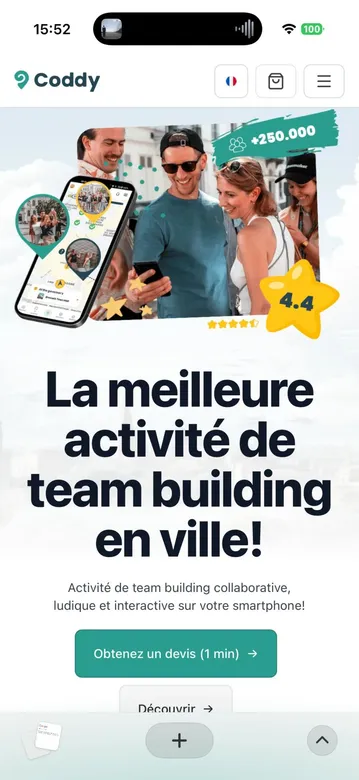
Coddy is an urban escape game platform running across Europe for hundreds of thousands of players. I designed and developed the whole product, front end, back end and Stripe e-commerce, on an infrastructure that takes high traffic, real-time purchases and automated content production.
The challenge: a site that holds up under load and converts
Coddy needed a complete digital product capable of supporting rapid international growth. The urban escape game market is fiercely competitive: every friction point in the purchase flow directly translates to lost conversions. The system had to be robust, fast, and fully custom-built.
The core challenge: building an ultra-performant front end designed for conversion and mobile experience, while maintaining a back office flexible enough to manage hundreds of games across multiple cities and languages. Because most players discover and book an experience on their phone, the mobile journey could not be an afterthought; it had to load quickly and guide visitors toward purchase with as few steps as possible.
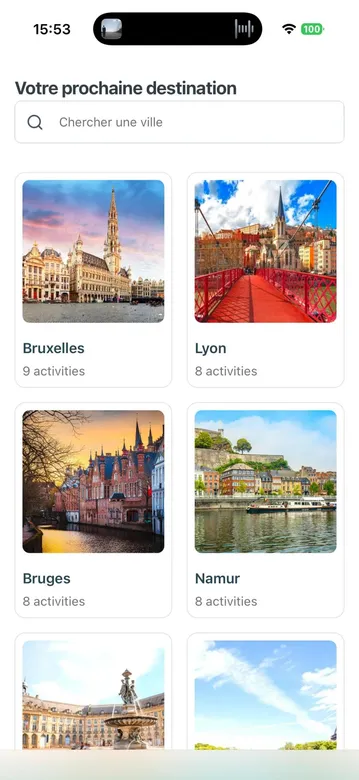
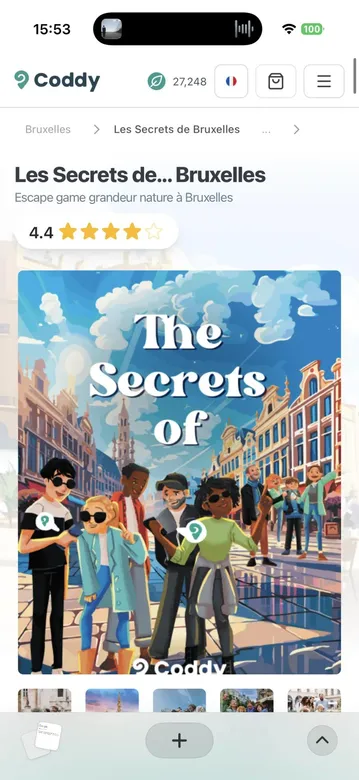
My approach: decoupled development with custom e-commerce and automated content
I opted for a decoupled architecture, where each layer evolves independently. Separating the front end from the back end meant the customer-facing experience could be tuned for speed and SEO on its own terms, while the systems behind it changed without forcing anything on the public site.
- A comprehensive back office for managing games, pages, blog posts, and operational data;
- A custom-built integrated e-commerce system, with no dependency on external platforms beyond Stripe;
- An automated content generation system to create game pages in every city;
- A scalable architecture designed to support international growth.
Keeping the e-commerce custom-built, with Stripe as the only external dependency, meant the purchase flow could be shaped around Coddy's own needs rather than the constraints of an off-the-shelf platform. Pairing this with the automated content generation system let the team expand into new cities without rebuilding pages one by one, so adding locations became a matter of configuration rather than development.


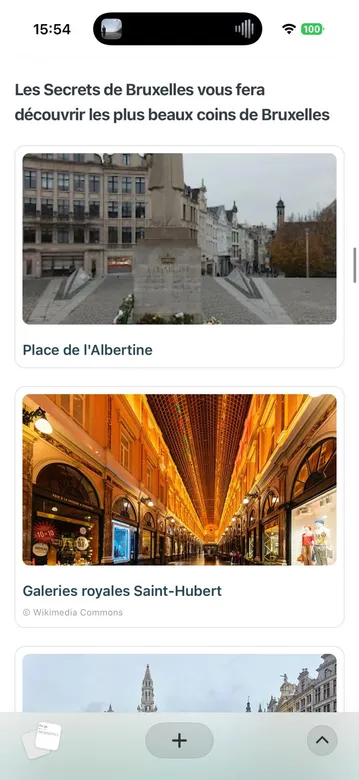
The outcome: a high-performance escape game website serving players across Europe
Coddy has become a complete product where user experience, performance and technical robustness serve the business strategy directly. The platform now serves hundreds of thousands of players across Europe.
The back office lets the team create and deploy a new game in minutes, with no technical intervention. Putting content creation directly in their hands removed the development bottleneck that usually slows this kind of expansion. The e-commerce processes thousands of transactions a month, in a market where any interruption in the purchase flow costs sales.
Frequently asked questions
Why build a custom e-commerce platform instead of using an off-the-shelf solution?
For Coddy, a custom-built e-commerce system, with Stripe as the only external dependency, allowed the purchase flow to be shaped around the brand's own needs rather than the constraints of a third-party platform. In a competitive market where every friction point in the purchase flow translates to lost conversions, this control over the checkout experience directly supports the business strategy.
How does the platform handle expansion to new cities and languages?
The platform combines a comprehensive back office with an automated content generation system that creates game pages in every city. This means adding a new location becomes a matter of configuration rather than development, so the team can grow across cities and languages without rebuilding pages one by one or relying on technical intervention.
What is a decoupled architecture and why does it matter for this project?
A decoupled architecture separates the front end from the back end so each layer can evolve independently. For Coddy, the customer-facing experience could be tuned for speed and SEO on its own terms, while the systems behind it changed without forcing anything on the public site.
Can the team add new games without a developer?
Yes. The back-office system lets the team create and deploy new games in minutes, with no technical intervention required. Putting content creation directly in the hands of the team removes the development bottleneck that usually slows down this kind of expansion.
Need a website that performs?
Let's talk about a fast, conversion-focused site built around your goals.