
















 CRO
CRO Website speed and conversion: which pages should you improve?
Understand LCP, INP and CLS, distinguish real visitors from lab scores and check commercial outcomes after performance fixes.

SB
Sébastien Balieu
Jan 5, 2026


 The problem
 Your customers know where their shipment is. Your prospects don't know anything about you.

The principal who consults three carriers reads the same brochure three times. Without any other element of comparison, it decides on the price per kilometer and asks you to match it.
Your approvals, your maintained fleet, your punctuality rates, your remaining drivers: this proof lies dormant in your systems and in your tender files. The client who discovers you online sees nothing and judges you without the documents.
The information is in your systems, your customers don't have access to it, so they call. Each call mobilizes someone to read a status aloud, and this time will not be billed anywhere.

Each month, a part of your filling goes through a marketplace which takes its share and maintains the customer relationship. You transport, it collects the connection, and you start again with the next load.
 The solution
 It informs your customers and qualifies your prospects before your business stalls.
Your customers serve themselves, your prospects arrive already convinced.

Your specialties, your areas, your commitments and what you refuse to transport. It is these choices that make the difference between two quotes. Written in black and white, they take you out of the price comparison.

Certifications, fleet, sites, service rates: what you bring out in each call for tenders becomes permanently visible. The client arrives at the consultation already knowing that you tick their boxes, and you leave with a head start.

A portal where your customers self-service track their shipments, connected to your existing systems, with alerts at every key stage. And quotation requests which arrive complete: nature, volume, frequency, destinations. Your teams deal with files instead of reading statuses over the phone.

Pages by flow, by sector and by destination, in the languages of your customers, written for what logistics managers search on Google and ask AI. The loads then arrive directly, without intermediary commission and without re-competition on price alone.
My job as a developer is to solve them.
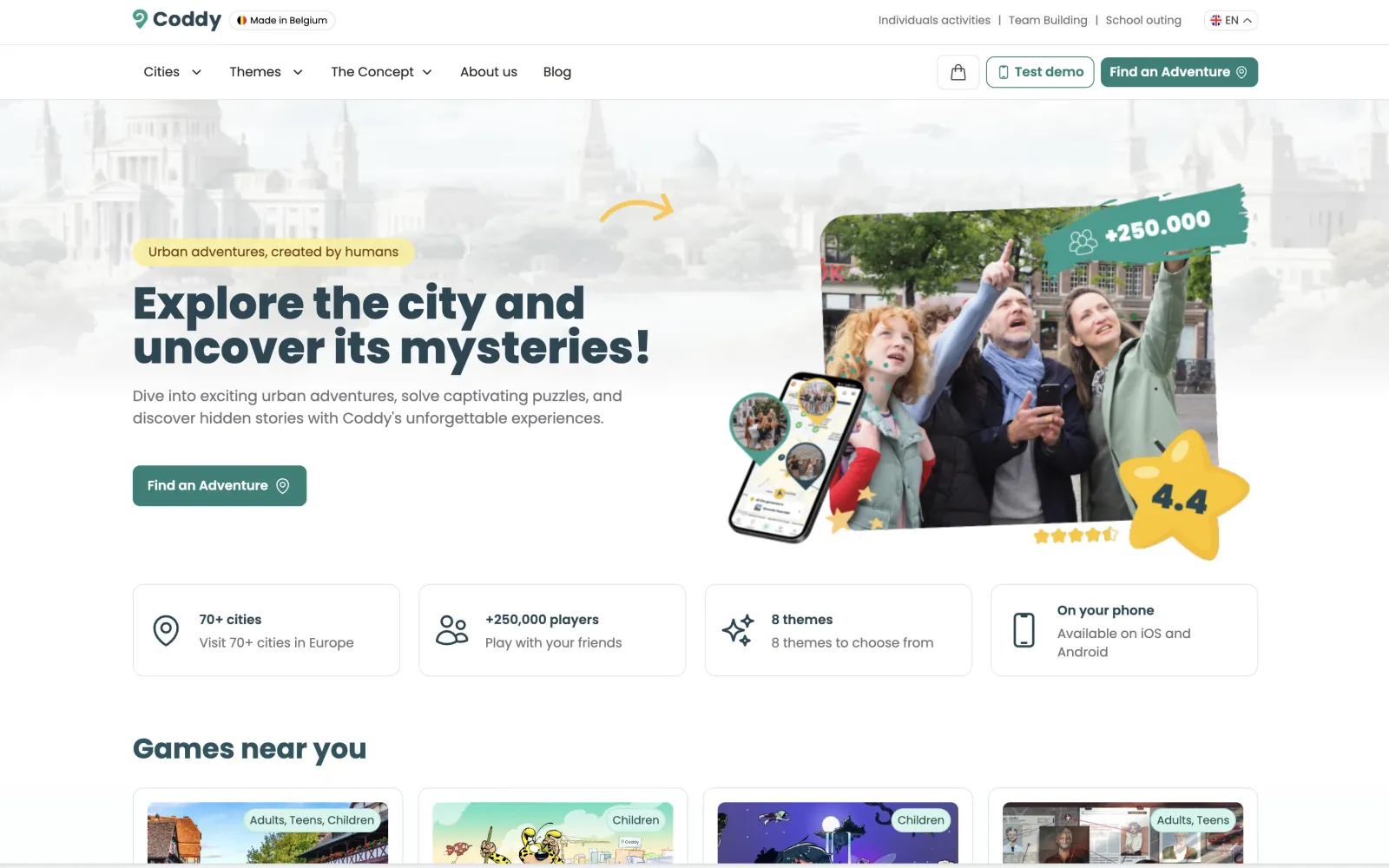
Urban escape games
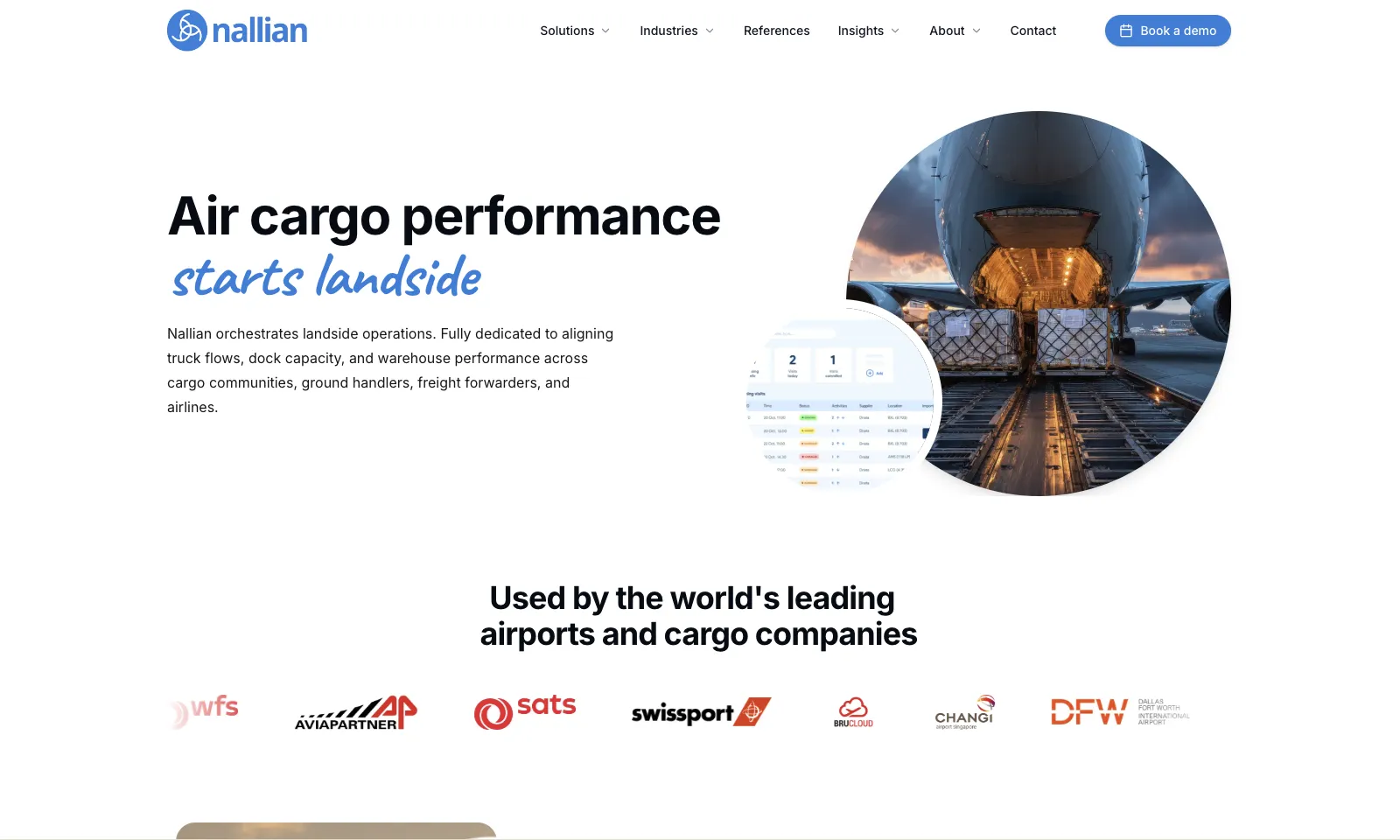
A B2B SaaS site redesign that loads in less than a second
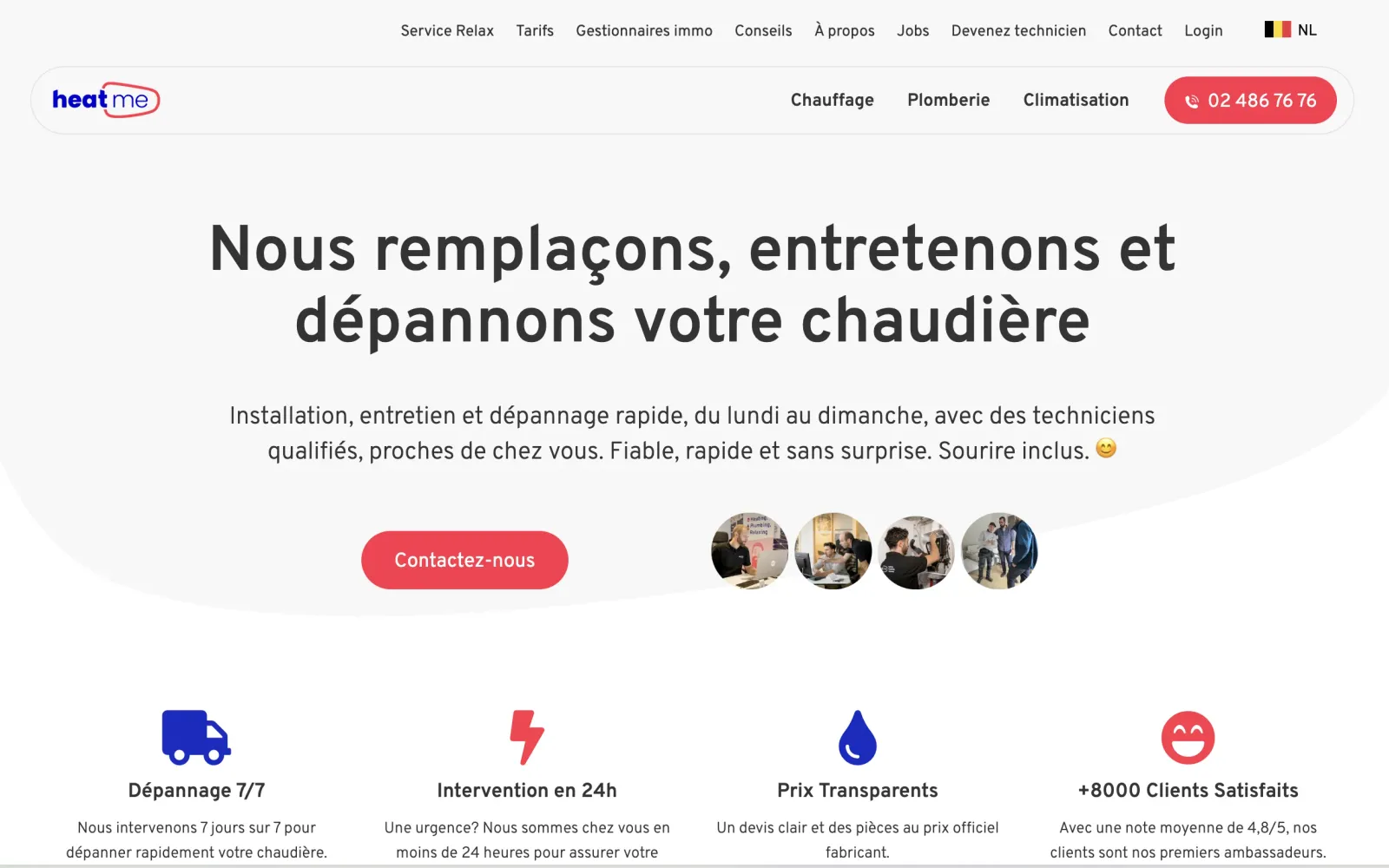
Largest network of heating engineers in Belgium
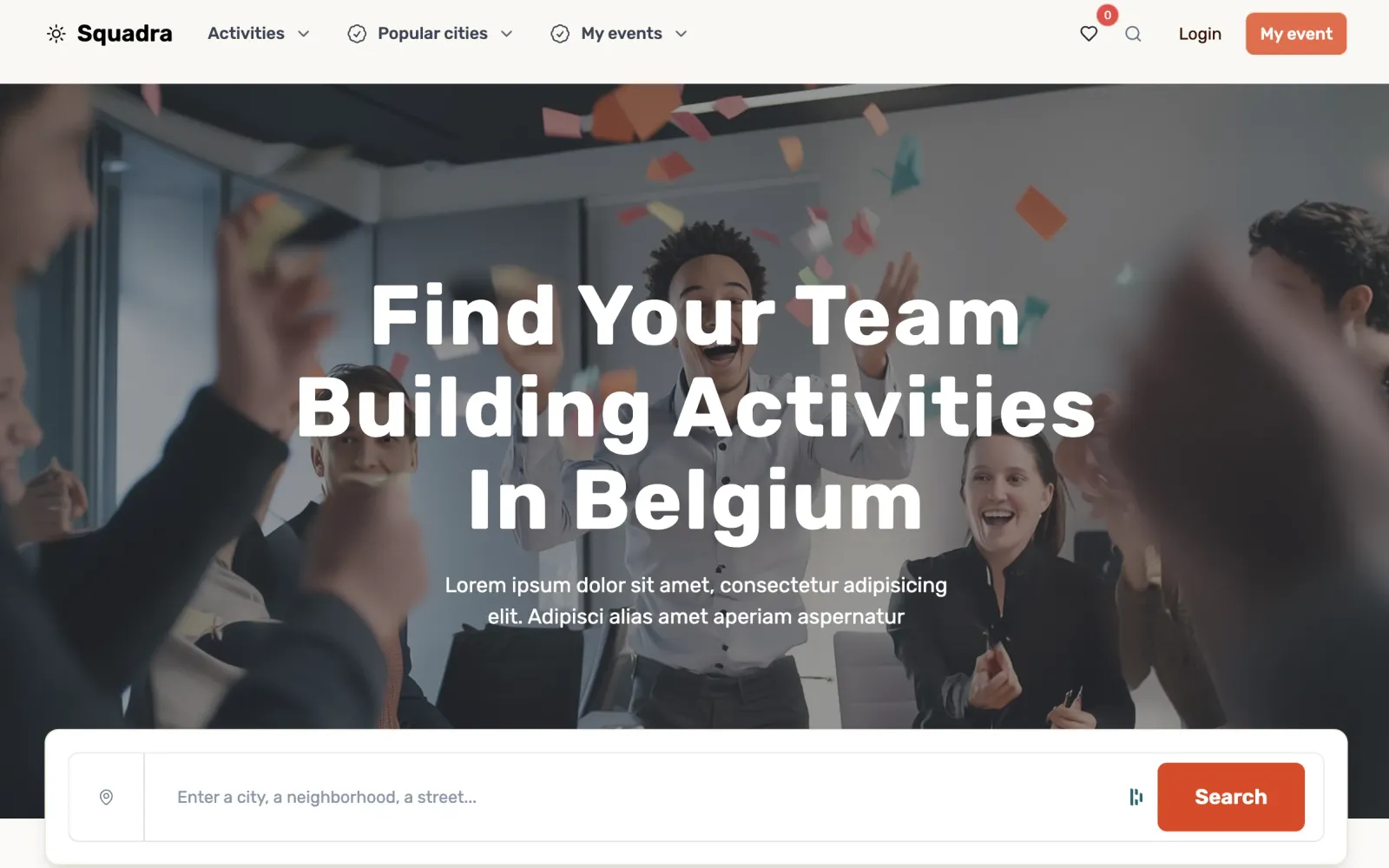
Team building activities marketplace
Internationally recognized board game publisher
What if the next project here was yours?
Ultra-fast sites and apps, built to measure.
Request a quoteSME managers who had the same need as you: a site that matches what they sell.
Sébastien is always attentive and understood our needs perfectly when it came to redesigning our website! The new site looks great and was delivered on time. We've already gained a few customers thanks to the improved SEO of the new site
Didier Boulvin
Coddy
Numinam's contribution to the development of our App has been significant in its success with our B2C and B2B customers.
Stephane Draux
Founder • Spengo
Numinam (One More Pixel) is doing a fantastic job for Euronet. They’ve started the mission in saving our web-site from a cyber-attack. We had lost a lot of information and they had to rebuild our web-site. They had to recover the data left on our…
Valérie Van Belle.
Managing director • Euronet
At Nallian we build solutions that are trusted by the world's leading airports, ground handlers and logistics companies. But our website no longer reflected that level of excellence. This redesign ensures our first impression matches the quality of…
Jean Verheyen
CEO • Nallian
The new website much better reflects who we are. It tells our story more clearly, it's easy to navigate, it looks fresh and modern. It is more Nallian.

Joke Aerts
Director of Marketing • Nallian
Numinam's technical and design vision has enabled us to improve our lead generation flows. A big step forward.
Jérôme Van De Sande
Product & Data Leader • Heat Me
Numinam has completely modernized our website. The design is clearer, more credible, and our visitors understand what we do. A real leap in quality. Also worth noting is the excellent collaboration between Numinam and our development agency. Thank…
Olivier Lafosse
Founder & CEO • Heat Me
It was a real pleasure to do business with Sebastien. He did a great job and transform our inefficient and boring website to a nice one that generate leads. Moreover, Sebastien is a patient and reliable partner and he's always ready to help.

Shirley Boterdael
Marketing & Com. Manager • Highcodata
You are not talking to a salesperson who will pass on to a project manager, who will brief a developer and a designer: you have all these people in front of you, in one, from the first meeting.
We lay the foundations: what your visitors see and feel.
from €595
Before writing a single line of code, we clarify the journey of your customers and prospects. The design then helps a logistics manager find their information in three clicks.
Your site, developed under Astro.
from €1,190
I develop your custom site: it loads in less than a second and transforms your visitors into quote requests. Optional customer portal connected to your systems, code that is 100% yours.
Being found on Google and cited by AIs.
from €595
Logistics managers search Google and ask ChatGPT before launching a consultation. I structure your site so that it stands out in both places, and I send you the position report so that you can see it move.
Save time on repetitive tasks.
from €595
Collection confirmations, delay alerts, customer reporting, document reminders: I automate what your operation is doing, with or without AI. Measurable results in 4 to 6 weeks.
Your site lives, improves and remains efficient.
I don't deliver a project and then disappear. Updates, optimizations, A/B testing and dashboards: I remain your long-term partner.
01 Framing call and implementation of the project
02 Models and validation
03 Development
04 SEO / AEO / GEO optimization
05 Launch and training
06 Monitoring and optimization

25 minutes to look at your situation together: the volume of calls that your customer service absorbs every day, what marketplaces cost you, what your site says about you to a client. You leave with a clear diagnosis, even if we never work together.
It's free and without obligation, and you can speak to me directly on the phone. The developer you speak to is the one who will build your site.
Three packages, still at the rate of €595 per day. Landing page (4 days, from €2,380): a page to present a service or receive quote requests. business website (8 days, from €4,760): your online transport company, with services, fleet, coverage areas and local SEO. Site with CMS (from 16 days, from €9,520): to go further, advanced SEO architecture, multilingual and integrations. Need a customer portal or dashboards connected to your TMS? It is a custom tool project, quoted on quote at the same daily rate. The code is yours. A 25-minute call is enough to meet your needs.
Yes. The portal is connected to your TMS via API: shipment status, vehicle geolocation, automatic alerts at each key stage (collection, transit, delivery), proof of delivery accessible online. Your customers can find information at any time without calling your operation.
Each follow-up call avoided means someone at your office is handling a file instead of reading a status out loud.
Yes, this is one of my areas of specialty. I develop custom integrations between your portal and your existing systems: ERP (SAP, Odoo, Microsoft Dynamics), TMS (Dashdoc, Shippeo, Transporeon), WMS (Reflex, Generix, Manhattan). Data flows via REST API or webhooks. Before writing a single line of code, I map your data flows to determine the best integration strategy.
Yes, in the vast majority of cases. Even older systems generally have an API (even basic), programmable CSV or XML exports, or database access. The flow mapping carried out upstream determines the best approach: direct API, exchange files, or intermediate middleware. If your system is truly closed, there is almost always an exploitable entry point. The free scoping call allows technical feasibility to be validated before any commitment.
The effect begins as soon as the portal is online and communicated to your customers. They tend to consult rather than call, especially if you activate automatic notifications by email or SMS at each key stage.
The remaining call volume then depends on your customers: some will continue to call out of habit. Your operation then deals with exceptions rather than status requests.
Yes. I have direct experience deploying multi-country and multilingual platforms, notably with Coddy, operating in 9 European countries. Each version is translated, optimized for SEO in its language and adapted to local expectations. Each regional manager can manage their content independently from a custom back office.
The complete source code of your platform lives in your own Git repository from day one, on standard open source technologies, with technical documentation provided on delivery. Trusted developers know the project and can intervene.
What I can't promise is to be available forever; what I can guarantee is that my departure will not block you.
Yes. Training on the portal and dashboards is included in the project. Your teams learn how to read indicators, manage customer access and deal with special cases, generally in one or two sessions. User documentation is provided for subsequent arrivals.
CRO Understand LCP, INP and CLS, distinguish real visitors from lab scores and check commercial outcomes after performance fixes.
Sébastien Balieu
Jan 5, 2026
 Price
Price Budget chatbot setup, CRM integration, monthly usage, testing and support. Compare the full first-year cost for your actual workflow.
Sébastien Balieu
Dec 12, 2025
Calendar not showing? Open it in a new tab