
















Coddy
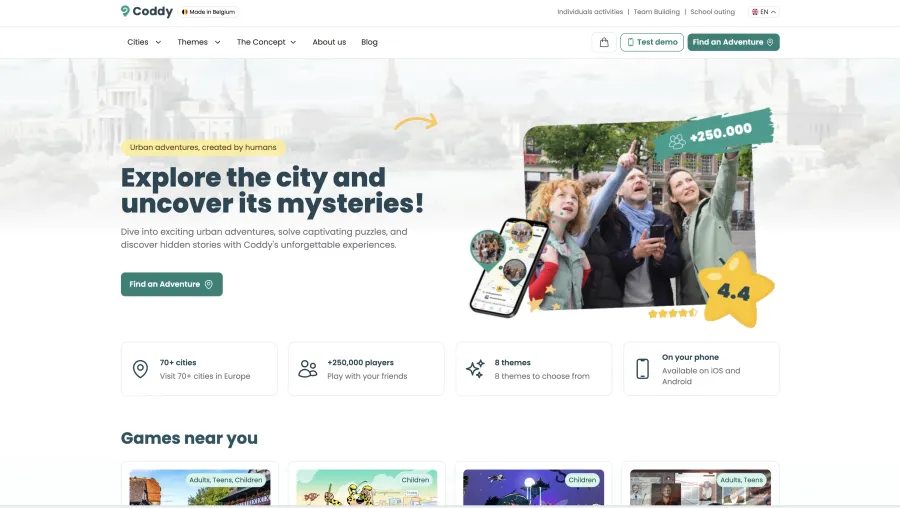

Coddy
60 % traffic via SEO
Product co-founded and developed for 6 years
- 250 000+ paying players
- 25 000+ transactions
- 5 languages
Numinam helps marketing teams get found on Google, ChatGPT, Perplexity and Gemini. We improve technical SEO, content, credibility and conversion so that visibility brings sales enquiries.
SEO and AI visibility for SMEs · Belgium and France
60 % traffic via SEO
Product co-founded and developed for 6 years
SEO traffic · 12 months
+20 %+20 % of SEO traffic
Measured over 12 months of support

Numinam is led by Sébastien Balieu, SEO consultant, developer and co-founder of Coddy. This dual skill makes it possible to analyze the acquisition, write the content and put the changes online without multiplying the number of stakeholders.
I analyze your SEO, your content and your presence in AI responses. We also look at the visits and requests received to know where we are starting from.
I spot their keywords, their questions and the competitors that appear. We choose the subjects closest to your offer and a purchasing decision.
I verify that AI search engines and bots can read your pages. I fix indexing errors, redirects, and speed or mobile display issues.
Every important topic has its page. I rework the tree structure and internal links to guide your visitors and help engines find your content.
I update useful pages and group together repeating ones. I create the missing content, with clear titles and answers to your customers' questions.
I add your customer cases, your results, the authors and the sources. I specify useful structured data: information that helps engines understand your pages.
We identify the media, partners and sites in your sector where you can share your expertise. The objective: to obtain mentions and relevant links to your site, also called backlinks.
I improve your landing pages, your messages and your forms. I link requests to your CRM to track what SEO is doing for your sales.
We track SEO positions, traffic and conversions. I also check AI citations on the same questions over time.

Sébastien is always attentive and understood our needs perfectly when it came to redesigning our website! The new site looks great and was delivered on time. We've already gained a few customers thanks to the improved SEO of the new site
Didier Boulvin
Coddy

Numinam (One More Pixel) is doing a fantastic job for Euronet. They’ve started the mission in saving our web-site from a cyber-attack. We had lost a lot of information and they had to rebuild our web-site. They had to recover the data left on our former server… that was a huge mission and they did it in a very professional way. Currently, they do our website maintenance and are assuring the security and the integrity of our website. Numinam is proactive and very reactive when we have to face a problem. Moreover, we’ve started collaborating on our SEO… also a huge mission… We wanted to improve our web visibility and after 3 months, we’ve started seeing the positive results. Mission seems to be very promising.
Valérie Van Belle.
Managing director • Euronet

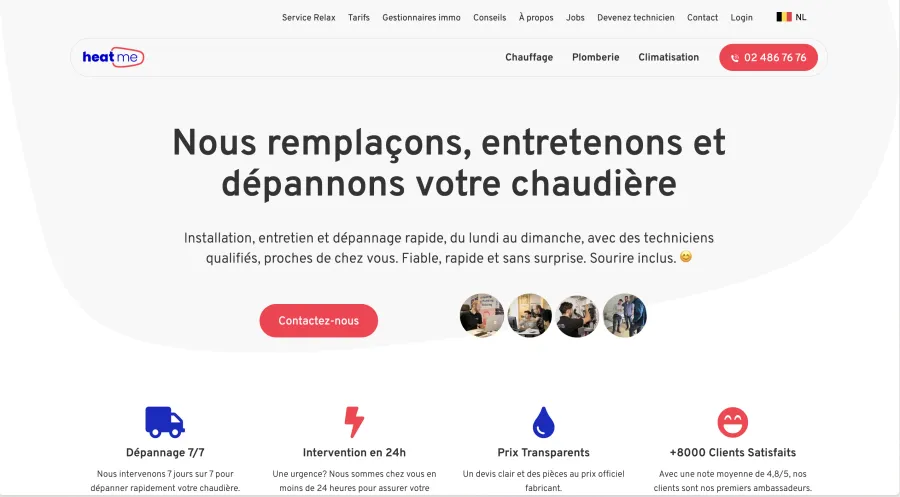
Numinam's technical and design vision has enabled us to improve our lead generation flows. A big step forward.
Jérôme Van De Sande
Product & Data Leader • Heat Me
AI Visibility, also called GEO or AEO, helps engines like ChatGPT, Perplexity, Gemini, and Google AI Insights understand your offering and cite your content.
I explain what you do, for whom and why choose you.
I add your examples, your results and their sources to make your content more reliable.
I ask AIs the same questions over time to track their mentions of your business.
SEO advances at the rate of what we publish and correct. We choose the scenario that corresponds to your objectives.
€2,380 / month
excl. VAT
Establish a regular presence.
We start slowly: two pieces of content per month and the technical corrections which unlock the indexing and speed of the site.
What comes out each month
€4,760 / month
excl. VAT
Occupy ground on your key queries.
One content per week, plus the in-depth work on the site: architecture, internal networking, service pages and visibility in AI responses.
What comes out each month
€9,520 / month
excl. VAT
Treat SEO as an acquisition channel in its own right.
Several projects are progressing in parallel: content production, page redesign, development of templates and tools that SEO needs.
What comes out each month
These are three typical scenarios. After our discussion, I will create a custom proposal for you.
Planning a defined project in Brussels? Check the Digitalisation Grant conditions before starting. Ongoing monthly support falls outside this scope.
Share your site, your priority markets and the requests you want to generate. Numinam helps you identify the first SEO or AI visibility project to launch.
Sébastien Balieu
25-minute call with your Growth Partner in Belgium and France
Calendar not showing? Open it in a new tab